Drywall Repair in Starke, FL
Roof and air-conditioner leak stains, cracks that return each season, doorknob holes and soft, water-logged board, repaired, worked into the surrounding texture and finished off with primer, waiting on your choice of paint.
Describe what the wall is doing; the return call comes from a drywall pro covering Bradford County, ready to set up pricing.
Call 7 days, 7am–9pm
Photo by text works too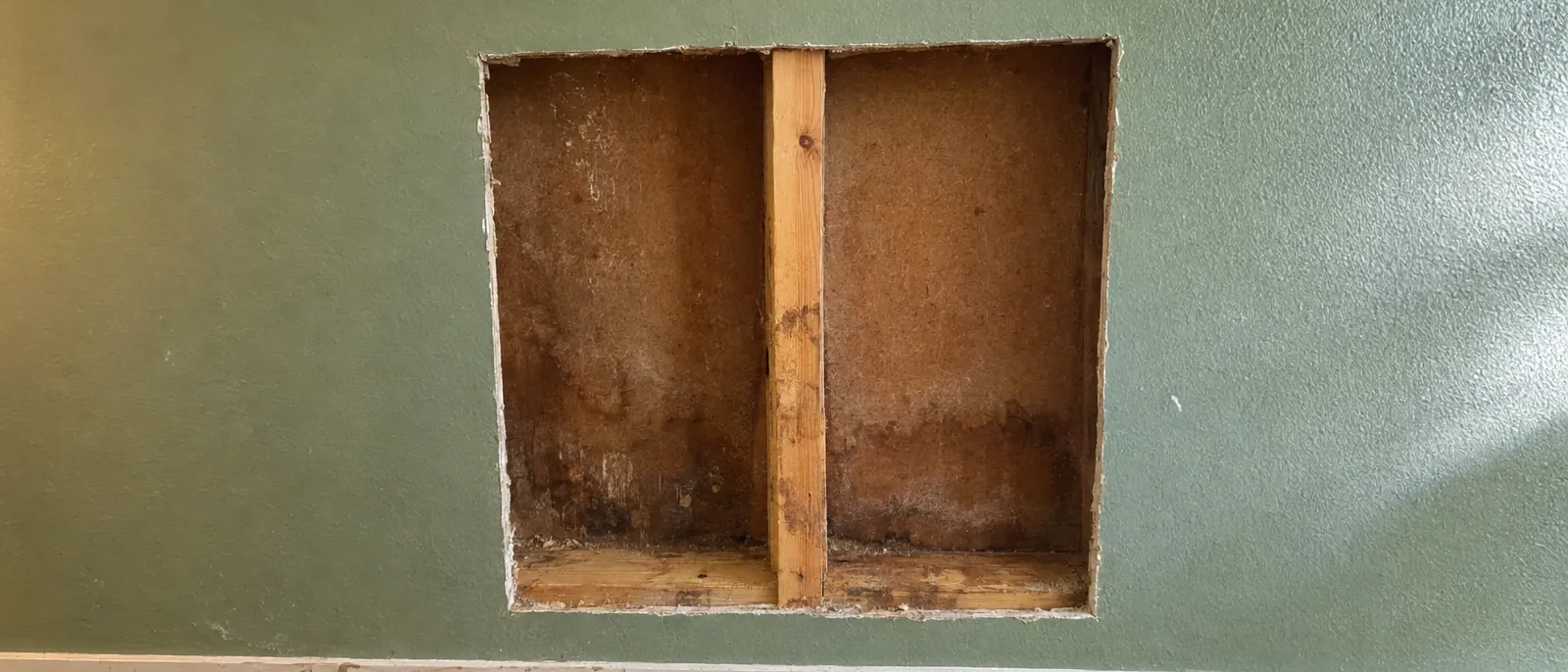
What should you know before booking a repair?
- Will the patch match the texture on the rest of the wall?
- Texture is rebuilt in thin passes and judged against the old wall under a lamp held low to the side, which throws shadows into any ridge that ceiling light hides. Orange peel, knockdown and smooth walls blend well with care. Old hand-troweled swirls are slower to copy. If the blend matters a great deal to you, ask for a trial on a scrap of board first.
- Is one small hole worth a phone call?
- Yes. A lone anchor hole or doorknob dent goes on the books exactly like a ceiling section. If several little spots are scattered through the house, list every one, since prepping and coating them side by side usually costs less than spreading them over separate jobs.
- Once painted, will the patch give itself away?
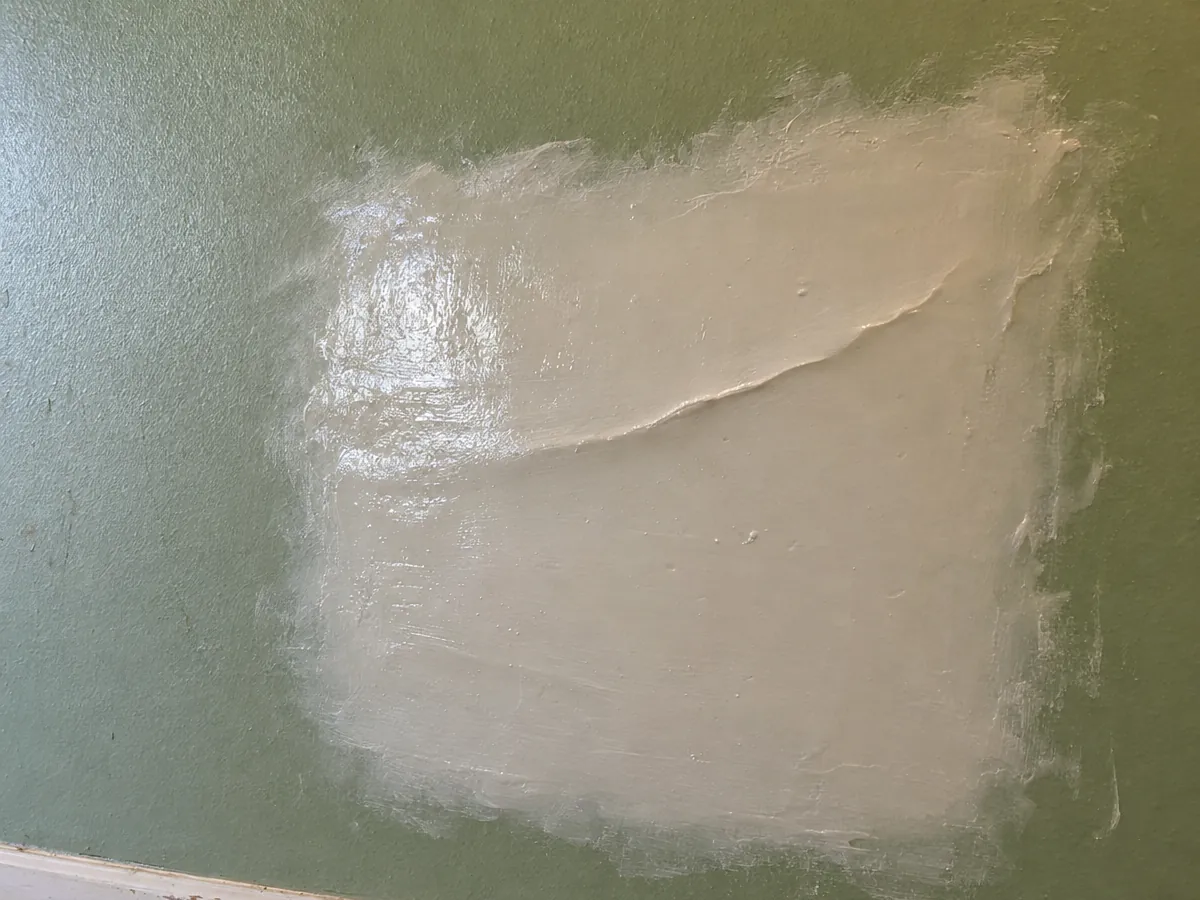
- Raw mud and fresh face paper absorb paint unevenly next to the old, sealed surface, so a sound repair gets primer before color. A full wall rolled corner to corner, rather than a dabbed square in the middle, makes the spot far tougher to find.
- How many days does a repair stretch over?
- Most of the calendar goes to drying, not working. Every coat of compound has to firm up before another can follow, and a soaked ceiling has to give up its water before it is closed. Expect a small patch to need a few short work sessions spread over several days; leak work takes more.
- How messy is the sanding?
- Sanded mud turns into a talc-fine dust that rides air currents well past the doorway. Plastic sheeting over the opening, covered floors and, on bigger jobs, a sander with a vacuum hose attached are all fair requests. Shifting lamps, chairs and framed pictures out beforehand helps a lot.
- Does a water stain always mean new drywall?
- No. Dry, flat, solid board often needs nothing beyond a sealer coat and fresh paint. Soft, puffy or drooping board is another story: that piece is removed down to the framing.
Which repair fits the damage you have?
Four repair types; follow any name for causes, method and cost in Starke houses.
- Ceiling leak repair
- Brown rings, blistered paint and drooping board left behind by roof trouble or storm-driven rain, dried, cut back and closed up flush.
- AC water damage repair
- Swollen closet drywall and stained hall ceilings from an overflowing drain pan or a choked condensate line.
- Settling crack repair
- Diagonal lines off door corners, split seams and ceiling-edge gaps, retaped so they hold instead of just filled.
- Hole patching
- Anchor holes, doorknob punches and bigger openings backed, patched and textured to finish level with the wall.
How old is the house, and what does that change?
Bradford County's seat is Starke, and its houses went up over a long stretch of time. Federal housing survey data for 2020 through 2024 tally 2,583 homes inside city limits; 1,331 of them predate 1980, and 887 of the homes still standing date from the 1950s and 1960s. Houses of that vintage bring their own patching quirks.
- Plaster walls
- If yours is among the 252 homes here built before 1950, some walls may be plaster on wood strips instead of drywall. Plaster takes a bonding coat and setting compound, not a drywall square screwed to empty air. Take a cover plate off any switch and look at the raw edge; plaster shows layers, drywall shows paper.
- Thinner board
- Some early gypsum board measures under the half inch that stores stock today. A new piece set into it gets shimmed or built out to bring its face level, or the joint reads as a step once painted.
- Settling lines
- Decades of seasonal shifting open hairline splits along seams and off the corners of doors and windows. Those are retaped rather than filled, or they tend to reappear.
- Paint layers
- The federal government banned lead-based paint for home use in 1978, so a house built before then may hold some under its newer coats. Before old paint is sanded, ask the pro which EPA lead-safe steps they follow to contain the dust.
What's damaged, and where?
A sentence or two is plenty. Mention whether the water source is fixed and whether the area is a wall or a ceiling.
Rather talk it through? (904) 977-3544
Call 7 days, 7am–9pm
After you send it, the drywall pro covering this corner of Bradford County rings the number you entered, hears about the wall and works up a price.
Is that ceiling stain old, or still growing?
A ring overhead can be a leak that dried up long ago or one still feeding water into the board with every storm. The ceiling guide sorts through stains, sags, truss uplift gaps along the wall line, popcorn damage and seam lines, and explains what each one points to and how long it can sit. For damage on a wall, the hole guide covers sizes, backing, and the parts a homeowner can safely take on first.
Did another trade leave an opening in the wall?
Openings like these are closed once the other work is finished and tested, so nothing has to be cut open twice.
- After a plumber
- Access holes cut to reach a supply line or drain tend to be ragged and oversized. The opening is squared, wood strips are screwed inside its edges as backing, and a replacement piece is set in, taped, and feathered out. Ask the plumber to prove the line holds without a drip before the wall goes back.
- After an electrician
- Relocated boxes, dead switch openings and notches cut to fish new wire leave small, awkward gaps. Each is backed so the patch cannot sink, then filled and textured. Where a box has been pulled out, its wiring should end inside a covered box before the wall goes back.
- After HVAC work
- A moved return grille or a new duct run can leave a pillow-sized hole overhead. Ceiling patches are fastened to joists or to cleats bridging them, since a ceiling piece held up by tape alone droops over time.
- After cable and security installs
- Low-voltage installers drill and notch along walls and inside closets. The holes are small but numerous, so they are best coated as a group after the wiring is final.
The method is the same one used for patching an impact hole or a bigger opening.
How far out from Starke does the work go?
- Starke
- Bradford County's seat, and the hub everything else radiates from.
- Lawtey
- Seven miles north on US 301.
- Hampton
- A Bradford County city a short way south-southwest.
- Brooker
- A town 17 miles west, on an offshoot of the Santa Fe River.
- Keystone Heights
- Across the Clay County line, about 12 miles away by State Road 100.
- Lake Butler
- The Union County seat, west-northwest of town.
- Waldo
- An Alachua County city south-southwest of Starke.
A line or two about each sits on the page covering nearby towns. Where we work
What makes a repair bill climb or shrink?
No two walls price the same, so a figure firms up only once a pro has the details. For scale, a January 2025 update of Fixr's nationwide cost guide lists a patched hole at about $60 to $200, a crack at $60 to $330, and water-damage repair across the walls or ceiling of one room at roughly $400 to $800. Thumbtack's national guide to ceiling drywall repair lists a typical spread of about $354 to $1,064. Neither number was gathered in Starke, so read them as rough national bearings. Things that push a job's cost in either direction:
- Size and count
- A single opening or several, and whether a small insert will do or a full sheet is needed.
- Ceiling or wall
- Overhead work goes slower, needs staging, and a ceiling patch has to land on joists.
- Texture
- Smooth walls take the most sanding; popcorn and heavy knockdown take the most care to copy.
- Moisture
- Damp board needs to dry and pass a meter check, and the leak must be stopped beforehand.
- Paint
- Primer belongs to any sound repair; rolling the full wall or ceiling is extra and often worth it.
- Getting to it
- Furniture, tall ceilings, stairwells and crowded closets all add time.
Own a rental in Starke? How do turnovers work?
Census estimates show renters in 963 of Starke's 2,202 occupied homes, so tenant turnovers account for a fair amount of drywall upkeep in town. A few habits make them smoother.
- Walk it once
- Photograph every room on move-out day and send the set together. Anchor holes, doorstop dents and scuffed corners can then be priced together, not piecemeal.
- Group the rooms
- Coats dry at the same pace whether there is one patch or twenty, so batching rooms cuts down on return trips.
- Tenants in place
- Mention on that first call whether a tenant still occupies the unit. The work can be split so bedrooms stay usable and the dusty steps fall in one block.
- Paint plan
- Let the pro know whether a painter follows. If not, ask for the patches to be primed so the next coat lays down evenly.
What will the room be like while the work goes on?
The steps are always the same: a price from the pro first, then the board, tape, coats, sanding, texture and primer. Here is what that feels like from inside the house.
- Dust
- Sanding is the dusty stage. Drop cloths, sheeting taped over the doorway and dust extraction on the sander keep the bulk of it contained.
- Drying
- Bucket mud dries by evaporation, so every coat must go hard and pale before sanding. Muggy weather stretches that out; setting compound cures on a timer and helps with deep fills.
- Visits
- Even a modest patch is spread across several short sittings. A leak-damaged ceiling section takes more.
- Primer and paint
- A patch is primed before color. Dabbing a square of touch-up paint rarely blends; rolling the full wall does.
- The look
- Done well, the repair lies flat and carries the same texture as its surroundings. In hard side light from a window, a trained eye can sometimes still find it. That is true of any patch.
Which five things help before you dial?
Five small jobs on your end that save a round of back-and-forth once the pro rings.
- Power first for a bulging ceiling. If the ceiling is swollen with water, flip off the breaker feeding the ceiling fixtures along that stretch before you do anything more. Afterward, nobody lingers underneath, pets included.
- Take two photos. A wide one from the doorway showing where the damage sits, and a close one with a quarter or pencil laid beside the damage.
- Measure it. Tape-measure the damage side to side and top to bottom, and note ceiling height for overhead work.
- Note the cause. Roof, AC drain, pipe, a knock, or no idea. If water is still coming, say so.
- Find the paint. A leftover can, or the color name off its lid, saves guesswork on the finish.
What makes a ceiling repair its own kind of job?
Overhead board breaks down in its own ways, mostly because gravity pulls on it and water usually comes from above. With Starke's humid subtropical weather, attic air handlers and summer downpours both push water toward the ceiling.
- Stains
- Rings with darker rims, frequently stacked, left by water that soaked in and dried. Covering them takes a sealing primer; flat ceiling paint alone lets the tan show again.
- Sagging
- Gypsum that has taken on water goes limp between the joists. Once it droops, it is replaced, never pushed back up.
- Truss uplift
- A crack tracing the line where ceiling board meets a partition, widest around winter and nearly shut by summer. It calls for flexible corner bead or refastening, not extra compound.
- Popcorn texture
- Damaged popcorn is scraped back around the repair and resprayed. Popcorn of some age can include asbestos, which is why a pinch of it is lab tested ahead of scraping.
- Seam lines
- Ruler-straight lines over the taped joints, nearly always tape whose bond has failed. The loose run is cut free and the joint taped fresh.
More detail is in the full ceiling guide, and water damage overhead has its own page on repairing a ceiling after a leak.
Want a local pro to call you about the wall?
Talk the damage over by phone, or write it up in the form, and add a photo by text when you can. The pro gives you a price before any board comes out, and the finished repair carries the surrounding texture and wears a coat of primer, ready for paint.
One conversation is enough to start: the pro who calls back names a figure for the repair before a blade touches the wall.